Search intent covered
how to make cat litter box easier to clean, litter box cleaning setup, cat box hard to scoop
Make a cat litter box easier to clean by improving access, scoop clearance, placement, litter depth, and the daily routine before adding more equipment.
how to make cat litter box easier to clean, litter box cleaning setup, cat box hard to scoop
Leave enough space above and beside the box to lift a scoop, remove clumps, and wipe the surrounding area. A hidden box can be difficult to maintain even when it looks tidy.
Place the box where the cat can reach it without crossing a blocked route, loud appliance, or tight corner. Cleaning convenience should not make the cat hesitate to enter or exit.
Keep bags, scoop, gloves, and the waste container nearby but outside the cat's walking path. A short repeatable routine is more useful than a large collection of accessories.
Use the box and litter instructions as a starting point, then observe whether the cat can turn, dig, and cover comfortably. Too much litter can increase tracking and make scooping heavier; too little can make the base harder to clean.
Clean the scoop and inspect corners, seams, liners, and high-use areas regularly. Follow the material's care guidance and avoid harsh changes that leave a strong odor the cat may reject.
If the cat suddenly avoids the box, strains, vocalizes, or has toileting changes, stop treating the issue as a cleaning upgrade and seek qualified veterinary advice.
These manual US Amazon affiliate picks come from the homepage litter problem group. Availability and prices can change on Amazon; use the notes as a fit check, not a live deal claim.

Best for: Multi-cat homes, senior cats, short-legged cats, large cats, and owners who want automatic cleaning.
Skip if: Kittens under 6 months, low budgets, small spaces, or people unwilling to maintain the machine and consumables.
Common owner feedback: Positive feedback focuses on low entry, large open space, and easier automatic cleaning; complaints focus on footprint, app/sensor setup, and odor control still depending on consumables and timely trash removal.
Honest downside: Large footprint; requires 2.4GHz WiFi; litter particle size and soft mats may affect detection.
Check on Amazon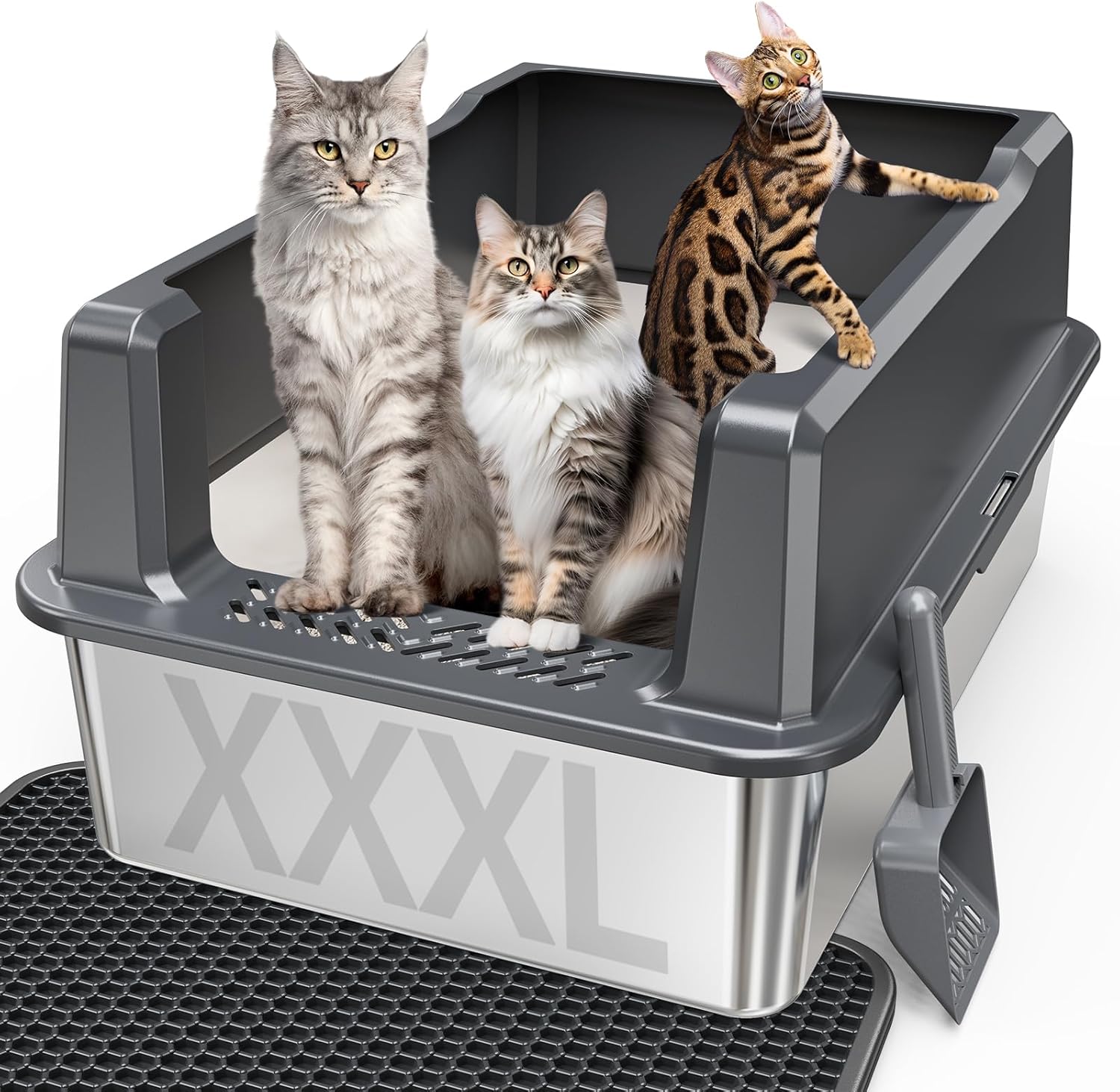
Best for: Large cats, multi-cat homes, and families who want less odor absorption and fewer urine leaks.
Skip if: Low budgets, small spaces, or cats that dislike high-sided or semi-covered boxes.
Common owner feedback: The page shows strong ratings and recent purchases; feedback often focuses on odor resistance, easy cleaning, and large space, while risks are size, weight, and entry height.
Honest downside: Not self-cleaning; the metal box is large and heavy; high sides may not suit cats with mobility issues.
Check on Amazon
Best for: Single-cat or medium/small-cat homes that want an open, easy-clean, odor-resistant metal litter box.
Skip if: People who need extra-large sizing, heavy multi-cat use, or automatic cleaning.
Common owner feedback: The page emphasizes stainless steel, open ventilation, and easy cleaning; common concerns are size fit, litter tracking, and side height.
Honest downside: Smaller than the XXL option; the open design cannot fully block odor.
Check on AmazonChoose a level, accessible location with enough room to scoop and wipe around the box while keeping the cat's entry and exit route open.
It may hold more material, but the added space can make turning, scooping, and wiping easier. Choose a size that fits both the cat and your available cleaning area.
A liner may suit some setups, but it can also shift, tear, or change the texture. Test the cat's acceptance and follow the box and litter guidance.