Search intent covered
cat water fountain low water level, fountain not holding water, cat fountain water level drops quickly
Troubleshoot a cat water fountain with a low water level by checking evaporation, pump intake, placement, cleaning, and the cat's access before replacing the unit.
cat water fountain low water level, fountain not holding water, cat fountain water level drops quickly
Mark the water level after a refill and observe it over a normal day. A low level can reflect drinking, splashing, evaporation, or a cat playing with the stream rather than a broken reservoir.
Place the fountain on a level, waterproof surface away from direct heat and litter dust. Look for dampness under the base, around seams, and near the power cable without putting electronics in water.
Use the fill line and care instructions for the exact model. Overfilling can create spills, while running below the pump's safe level can make circulation noisy or unreliable.
Turn the unit off before inspecting the pump, intake screen, tubing, and filter area. Hair, food dust, mineral residue, and slimy buildup can restrict flow and make the water appear to disappear faster.
Keep the old bowl available while you clean or test the fountain. If the cat drinks less, stops using the setup, or has a sudden change in drinking or urination, treat that as a health concern rather than a shopping problem.
Recheck the water level after reassembly and a full test cycle. A fountain is only useful when the cat accepts its flow, sound, location, and maintenance routine.
These manual US Amazon affiliate picks come from the homepage water problem group. Availability and prices can change on Amazon; use the notes as a fit check, not a live deal claim.

Best for: Cat homes where cats avoid still water, outlets are inconvenient, or owners want cordless fountain placement.
Skip if: People who do not want regular cleaning, filter replacement, or who expect the whole unit to be dishwasher-safe.
Common owner feedback: Positive feedback focuses on cordless placement, quiet operation, and cats drinking more; complaints focus on filter consumables, battery life/charging, and pump maintenance.
Honest downside: Not dishwasher-safe; the tank, tray, filter cotton, and pump need cleaning at least weekly.
Check on Amazon
Best for: Cat homes that prefer a heavier ceramic body, avoid plastic contact surfaces, and want a quiet water flow.
Skip if: People who worry about breakage, often move the fountain, or need an extra-large capacity.
Common owner feedback: The page emphasizes ceramic material, low noise, and stability; common risks are weight, fragility, and cleaning maintenance.
Honest downside: Ceramic is heavier and easier to break if dropped; the pump and filters still need cleaning.
Check on Amazon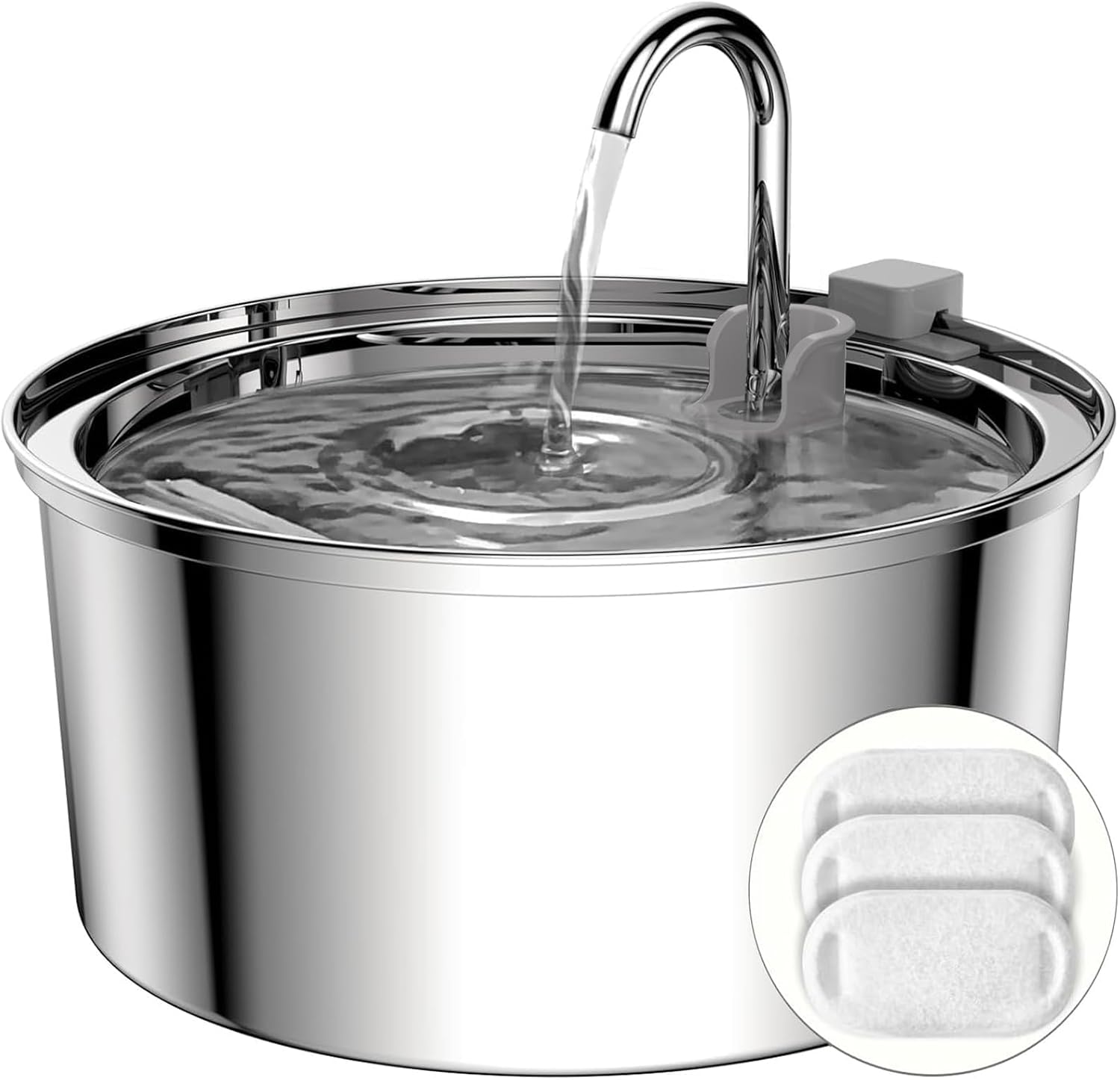
Best for: Multi-cat homes and owners who want larger capacity with a stainless steel contact surface.
Skip if: Small spaces, single-cat homes, or people who do not want to maintain a larger device.
Common owner feedback: The page emphasizes large capacity and low noise; common concerns are pump noise, filter replacement, and cleaning frequency.
Honest downside: Large capacity does not mean less cleaning; the pump and filters remain maintenance points.
Check on AmazonWater may be consumed, splashed, evaporated, or lost through a leak. Check the level over a normal day and inspect the surface underneath before replacing the fountain.
Residue and hair can restrict circulation and change how water moves. Turn the unit off and follow the model's pump-cleaning instructions.
Yes. Keep a backup bowl available during cleaning, troubleshooting, and any transition so the cat always has access to water.