Search intent covered
cat water fountain for cats that knock over bowls, stable cat water setup, stop cat tipping water bowl
Choose a cat water fountain for a cat that tips bowls by checking stability, access, cleaning, noise, and whether the new setup actually fits the cat's drinking habit.
cat water fountain for cats that knock over bowls, stable cat water setup, stop cat tipping water bowl
Watch how the cat tips the current bowl: pushing, pawing, jumping nearby, or catching a cord. The cause helps you choose a safer location and shape.
Place the fountain on a level surface with enough room around it. A mat can help contain splashes, but it does not fix a slippery or unstable base.
Keep cords and nearby objects out of reach where possible, and follow the product instructions for placement and cleaning.
Introduce the fountain while the existing bowl remains available. Observe whether the cat prefers the stream, surface, height, or a quieter location.
Check water level, hair, food dust, and flow regularly. A fountain that is stable but dirty or noisy can still be rejected.
If tipping continues, change one variable at a time: location, mat, water level, or bowl backup. Persistent changes in drinking or urination need veterinary attention.
These manual US Amazon affiliate picks come from the homepage water problem group. Availability and prices can change on Amazon; this is a fit guide, not a live deal claim.

Best for: Cat homes where cats avoid still water, outlets are inconvenient, or owners want cordless fountain placement.
Skip if: People who do not want regular cleaning, filter replacement, or who expect the whole unit to be dishwasher-safe.
Common owner feedback: Positive feedback focuses on cordless placement, quiet operation, and cats drinking more; complaints focus on filter consumables, battery life/charging, and pump maintenance.
Honest downside: Not dishwasher-safe; the tank, tray, filter cotton, and pump need cleaning at least weekly.
Check on Amazon
Best for: Cat homes that prefer a heavier ceramic body, avoid plastic contact surfaces, and want a quiet water flow.
Skip if: People who worry about breakage, often move the fountain, or need an extra-large capacity.
Common owner feedback: The page emphasizes ceramic material, low noise, and stability; common risks are weight, fragility, and cleaning maintenance.
Honest downside: Ceramic is heavier and easier to break if dropped; the pump and filters still need cleaning.
Check on Amazon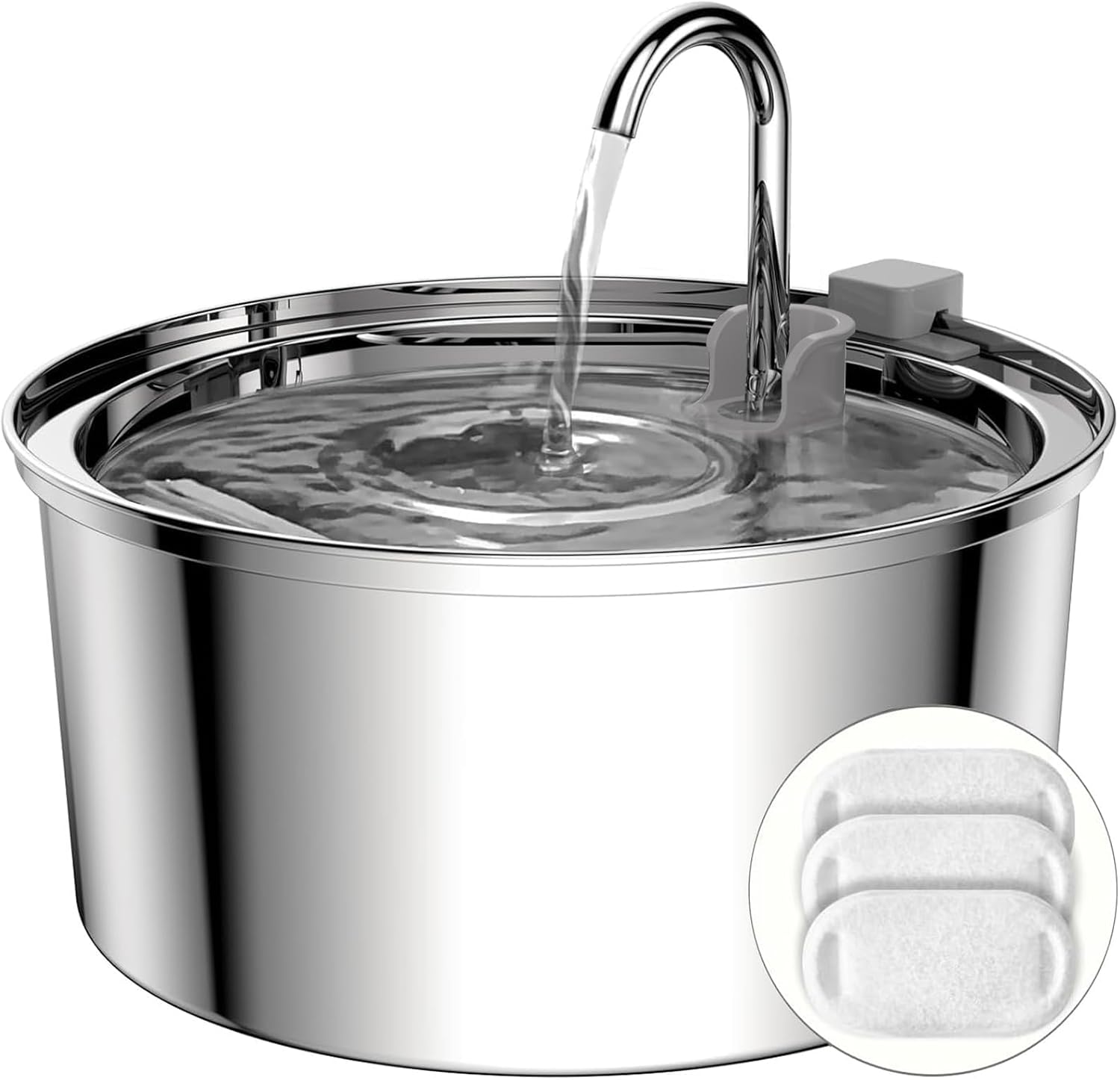
Best for: Multi-cat homes and owners who want larger capacity with a stainless steel contact surface.
Skip if: Small spaces, single-cat homes, or people who do not want to maintain a larger device.
Common owner feedback: The page emphasizes large capacity and low noise; common concerns are pump noise, filter replacement, and cleaning frequency.
Honest downside: Large capacity does not mean less cleaning; the pump and filters remain maintenance points.
Check on AmazonIt may help when the problem is a light bowl or spilled water, but stability, placement, and the cat's preference still need testing.
Keep a backup bowl during the transition so the cat always has access to water while you observe the new setup.
Use a quiet, level, accessible location away from litter and heavy food debris, with enough space to clean and inspect it.