Search intent covered
cat litter box near food, how far should litter box be from food, small apartment litter box placement
Decide whether a cat litter box can be near food by separating odor, dust, access, cleaning, and feeding routes before rearranging a small home.
cat litter box near food, how far should litter box be from food, small apartment litter box placement
Do not place food bowls directly beside the litter box. In a small home, create as much separation as possible with different sides of the room, a doorway, or a clear visual and walking route.
Keep the litter box on a level surface with enough clearance to scoop and carry waste without passing over the feeding area.
Check where litter lands after the cat exits. A mat or cleanup zone can help, but it should not narrow the cat's route or become a place where food and litter mix.
Prioritize a location that lets you clean the box regularly and refresh food and water without moving through a blocked or noisy corner.
Watch whether the cat avoids food, hesitates at the box, or changes its route after the rearrangement. Change one placement variable at a time so you can tell what helped.
Sudden litter-box avoidance, straining, or toileting changes need qualified veterinary attention, not only a new box or a different room layout.
These manual US Amazon affiliate picks come from the homepage litter problem group. Availability and prices can change on Amazon; use the notes as a fit check, not a live deal claim.

Best for: Multi-cat homes, senior cats, short-legged cats, large cats, and owners who want automatic cleaning.
Skip if: Kittens under 6 months, low budgets, small spaces, or people unwilling to maintain the machine and consumables.
Common owner feedback: Positive feedback focuses on low entry, large open space, and easier automatic cleaning; complaints focus on footprint, app/sensor setup, and odor control still depending on consumables and timely trash removal.
Honest downside: Large footprint; requires 2.4GHz WiFi; litter particle size and soft mats may affect detection.
Check on Amazon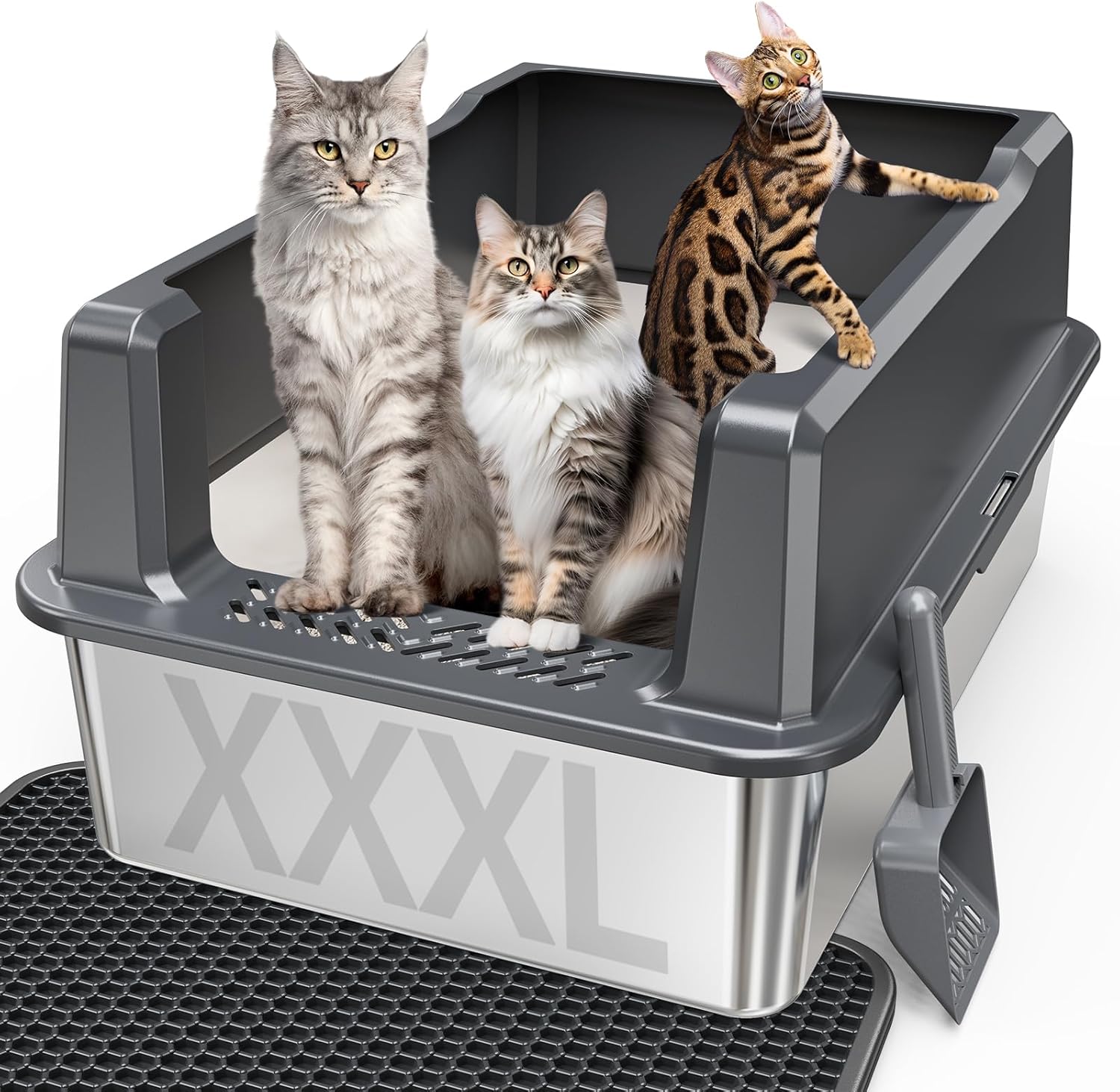
Best for: Large cats, multi-cat homes, and families who want less odor absorption and fewer urine leaks.
Skip if: Low budgets, small spaces, or cats that dislike high-sided or semi-covered boxes.
Common owner feedback: The page shows strong ratings and recent purchases; feedback often focuses on odor resistance, easy cleaning, and large space, while risks are size, weight, and entry height.
Honest downside: Not self-cleaning; the metal box is large and heavy; high sides may not suit cats with mobility issues.
Check on Amazon
Best for: Single-cat or medium/small-cat homes that want an open, easy-clean, odor-resistant metal litter box.
Skip if: People who need extra-large sizing, heavy multi-cat use, or automatic cleaning.
Common owner feedback: The page emphasizes stainless steel, open ventilation, and easy cleaning; common concerns are size fit, litter tracking, and side height.
Honest downside: Smaller than the XXL option; the open design cannot fully block odor.
Check on AmazonThere is no single useful distance for every home, but keep the box and food as separate as the layout allows and avoid placing them directly beside each other.
It can be necessary in a small space, but use the greatest practical separation, keep routes open, and prevent litter dust and waste from reaching the feeding area.
A calm approach, cleanable surfaces, open access, regular maintenance, and the cat's willingness to use both areas matter more than an arbitrary measurement.